
Digital marketing in patna
Title; Best digital marketing institute in India
Heading;Best Digital Marketing Online Course in India – Why Zinmatt Is Setting a New Standard
Introduction
Online marketing of vessels is not an aspect that is talked about, this has become an aspect of life, this has become an element of success in the profession, the level of this business growth is decreasing, take good care of the aspect of competition, digital marketing is totally dependent upon easy skills, the requirement of digital marketer is rising hugely, there are ample opportunities to enhance it as an occupation, whether it is related to doing an occupation, becoming a freelancer, becoming a content writer, even if it is related to starting an individual business, it can all be accomplished, with the acquisition of a knowledgeable practical world, with experience, with mentorship, it is possible to accompany yourself with the journey of digital marketing knowledge, long journey in the marketing world Till time self-confidence in this WORLD.
What Makes an Online Digital Marketing Course Truly the Best(DESCRIPTION)
What is the best about an online digital marketing course? Before joining any course, it is necessary that we know what kind of institution we are getting into. What the institution is best at. Hands-on training and not just learning from theory. A syllabus up to date and according to the industry. Top-notch career and placement counseling. Experience in the real world of marketing is the best learning experience ever. Adaptability and personal care. Care even after the course is over. Ten people in the kitchen and managing all things and pushing boundaries further. How are all these youngsters doing it? They shouldn’t be alone in all this and should have someone to look after them in all matters. How do they do it? We know.
Zinmatt has emerged as the
1. Industry-Orient
zinmatt stands as the best digital online marketing for India because it has industry-focused curriculum, it designs an achievement-based curriculum, which is what the company needs, it does not have an outdated academic model, all the platforms, algorithms, and tools used in this course are continuously changing, let us tell you—-the model of cement like search engine optimization, social media marketing, Google Ads, and meters, conversion, email automation marketing, analytics, air tools in digital marketing, and first of all Canva, they have taught everything with such expertise; they have explained everything to us properly, spending an entire day on every subject so that we can grasp it properly.
2. Practical Learning with Real Examples
Zinmatt delivers practical learning sessions using real-world examples because ZINMATT feels that learning should occur not only in listening but in actions too. He wants students to develop “life projects” and implement real-world “brand scenarios” such as “Google Ad campaigns creation,” “budget creation,” carrying out “SEO audits on real websites,” and “social media
3.Only experienced mentors are involved, not just trainers.
The project has kept experience mentors, not only trainers, it is alleged the experience mentors, with experience, they can provide a low-class and high-class session, win from where, how to win it, from where we attack, from where we can play cricket, the trainer of the judgment is himself a digital marketing expert who has performed a lot of his personal marketing, google ad, meta ad, which he himself is doing, doing on the actual website, so that he can say from where comes the challenge, what is the failure, how can our growth take place, the actual things which we do not know, they prepare us half in advance because he has already experienced that thing, has already met that thing, so how does it go that in actuals sometimes if we are not able to join, they provide us with recorded videos too, so by watching this video also we are doing the things which we do not do, it is really beneficial because in actual institutes they do not provide us with recordings, they provide us with this, respectively,
Comparison: ZINMATT vs Other Digital Marketing Institutes in India
| Features | ZINMATT | Other Institutes<br>(e.g., Vidmate, HubSpot, Digital Marketing Academy) |
| Practical Training | Unlimited practical training | Limited practical training |
| Live Projects | Offers real-time live projects | Live projects are rare |
| Career Support | Strong career support (jobs, freelancing, guidance) | Minimal career support |
| Personalized Training | Yes | No |
| Daily Updates on Marketing Trends | Yes (regular industry updates) | Updates may not be frequent |
| Training Approach | Fully hands-on, practical-focused | Mix of theoretical and practical learning |
| Certifications | Government-approved certifications | Industry-recognized certifications |
| Tools & Software Access | Canva Pro, Hostinger, Semrush, and more | Limited access to tools |
Other Notable Digital Marketing Institutes in India
| Institute Name | Key Highlights |
| Boston Institute of Analytics (BIA) | Comprehensive curriculum, hands-on projects, industry-experienced mentors |
| Seven Boats Academy | Advanced digital marketing specialization, practical training, certification |
| IIM Skills | Online paid courses with certification and placement support |
| UpGrad | Long-term online programs, live sessions, projects, career services |
Who should choose digital marketing platform
Beginners;Those who want to begin their careers. No experience needed. It will take you from begining to advanced
Carrier oriented persons ;who are looking to upgrade their skills or move to the digital world
Entrepreunership; a person wanting to start a business,
Job seeker; an individual searching for employment in digital marketing with skills and training, as well as career support.
What are the advantages for learning digital marketing knowledge through ZINMATT?
Practical experience with real-world tools
Creating a portfolio and finding work and freelancing opportunities
Develop an in-depth knowledge of marketing strategy
Attain confidence in client or campaign matters
Develop strength in career guidance or internships
Why digital marketing growing in india ?
Digital marketing is growing a lot now because nowadays people are focusing more on digital marketing. Because its answer is also more, who has grown the size of marketing and from traditional offline that was a single shop, has made it multinational, television ads, and all this is not important now, to attract the audience we will have to make a lot of use of the digital world so that our product promotion gets spread across the country, this is the biggest reason and digital marketing, the demand for digital marketing grew up because companies are hiring such a person who is the digital marketing manager, HTML, performance marketing, content strategy, mail marketer unlike others, they get more knowledge of the rules of digital marketing as compared to others. Health, career, studies, commerce, finance, entertainment technology, this all companies that should have such a salesperson should have online digital marketing expertise.
Conclusion
Digital marketing is also increasing to a great extent at this moment due to the fact that currently, more and more people look at digital marketing. As the answer to it is also more, who has increased the size of marketing and from traditional and offline, which was only one shop, has now made it multinational, television advertising, and all that is not significant now. So to attract the audience, we have to do extensive use of the digital world so that our product marketing gets promoted all over the country.
So, this is the major reason and digital marketing. The demand for digital marketing has now increases to a great extent due to the fact that all companies now hire such an individual who is the digital marketing manager, HTML, performance marketing, content strategy, mail marketer and unlike all others, they know more about the rules and regulations of digital marketing compared to others. Health, career, studies, commerce, finance, entertainment technology, all such companies that should have such an individual also have to be very knowledgeable about digital marketing.
Call to action
Would you like to become a successful digital marketer?
If you are ready to join as quickly as possible, you need to join a secure institute such as the one represented by zinmatt
The course will help you progress from beginner to advanced.
A Revolutionary Way to Talk to Your Future Self Using Artificial Intelligence
Artificial Intelligence, or AI for short, is one of the most significant and rapidly developing technologies in the contemporary world, and it is defined as the ability of machines and computer systems to carry out tasks that require human intelligence, such as learning from experience, understanding language, recognizing images, solving problems, making decisions, and even displaying creative behavior.
Unlike conventional computer programs that follow a set of predetermined instructions written by human developers, AI systems are developed to analyze large amounts of data, detect patterns in the data, and learn from experience without being explicitly programmed for every scenario, making them more flexible and powerful in solving complex real-world problems.
Essentially, AI relies on a combination of data, algorithms, and computational power, with data serving as examples of the real world, algorithms being the learning mechanisms that uncover patterns in the data, and computational power being the engine that enables the algorithms to learn from the data by processing large amounts of information in a matter of seconds.
AI makes you stop and think deeply about your life today
Artificial Intelligence, or AI for short, is one of the most significant and rapidly developing technologies in the contemporary world, and it is defined as the ability of machines and computer systems to carry out tasks that require human intelligence, such as learning from experience, understanding language, recognizing images, solving problems, making decisions, and even displaying creative behavior.
Unlike conventional computer programs that follow a set of predetermined instructions written by human developers, AI systems are developed to analyze large amounts of data, detect patterns in the data, and learn from experience without being explicitly programmed for every scenario, making them more flexible and powerful in solving complex real-world problems.
Essentially, AI relies on a combination of data, algorithms, and computational power, with data serving as examples of the real world, algorithms being the learning mechanisms that uncover patterns in the data, and computational power being the engine that enables the algorithms to learn from the data by processing large amounts of information in a matter of seconds.
AI makes you stop and think deeply about your life today
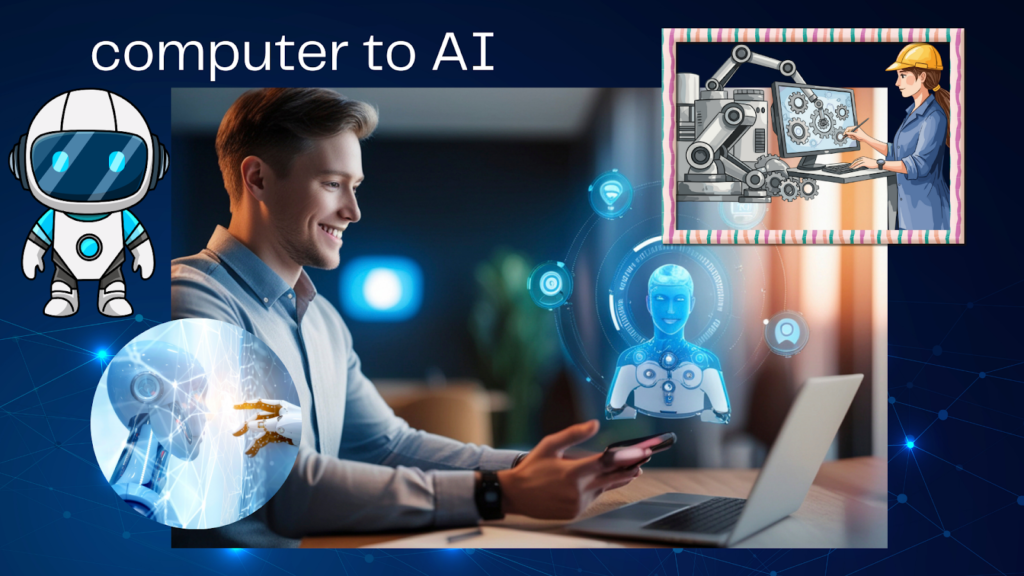
computers enable the system to process information quickly and efficiently, allowing AI models to train on millions or even billions of examples. One of the most significant areas of AI is machine learning, which enables computers to learn automatically from data and experience rather than being programmed manually, and within machine learning, there is a more advanced method called deep learning that uses artificial neural networks modeled on the human brain, allowing computers to recognize speech, identify objects in images, translate languages, and produce human-like text with a high degree of accuracy. Another significant area of AI is natural language processing, which concentrates on developing machines that can understand, interpret, and respond to human language in a meaningful way, and this technology is what enables chatbots, voice assistants, and translation software to speak with humans in everyday language.
As AI technology advances, it will also bring changes to the way people learn, work, and interact with each other, and digital skills and lifelong learning will become even more essential in order for people to keep up with new technologies and remain active participants in a rapidly changing economy. Ultimately, artificial intelligence is more than just a technological innovation, as it is a transformative force that is changing society, and it poses profound questions about what it means to be intelligent, how decisions should be made, and how humans can guide powerful technologies in positive ways, and although AI technology itself does not have intentions or desires, the choices that people who design, use, and regulate AI technology make will determine whether it will be a force for widespread progress or a source of new challenges. Thus, understanding what AI technology is, how it works, and how it impacts various aspects of life is important for everyone, from scientists and engineers to students, workers, policymakers, and citizens, as it enables society to be active participants in shaping the future of technology rather than simply reacting to it. In short, artificial intelligence is the science of making machines do tasks etc
How AI works?
Artificial Intelligence, or AI, functions by allowing machines and computer programs to learn from data, find patterns, make decisions, and optimize their performance over time, rather than simply following a set of pre-programmed instructions written by humans. Regular software follows precise instructions like “if this happens, then that happens,” but AI systems are built to find those instructions on their own by analyzing massive amounts of data and finding patterns in it. This capability to learn and adapt is what gives AI its power and makes it ideal for complex tasks like face recognition, speech recognition, driving cars, and predicting the future. At a fundamental level, AI operates through three key elements: data, algorithms, and computing power. Data gives the AI examples of the real world, algorithms are mathematical formulas that learn from the data, and computing power enables the AI system to analyze massive amounts of data quickly.
The next step after data collection is the use of algorithms, which are the learning processes that instruct the AI on how to look for patterns in the data. Algorithms are a set of mathematical instructions that modify and adapt as they analyze more examples. One of the most popular techniques used in AI is machine learning, which involves the improvement of the system’s performance as it learns from experience rather than being explicitly programmed for each task. In machine learning, the algorithm examines the input data and the corresponding correct answers and then learns to predict the correct output for new, unseen data. For example, in spam detection, the AI learns the patterns that usually exist in spam messages and then uses that information to determine whether an incoming message is spam or not spam.There are various kinds of machine learning techniques that describe how AI functions in different contexts. One of these is supervised learning, where the AI is trained using labeled data, which means that each example of input data has the correct answer already provided. For instance, pictures are labeled as “dog” or “cat,” and the AI learns to match certain characteristics with these labels. Another kind of machine learning is unsupervised learning, where the data is not labeled, and the AI has to identify hidden patterns or structures on its own, such as grouping customers with similar buying patterns in market research. There is also reinforcement learning, where the AI learns through interacting with an environment and receiving rewards or penalties for its actions, much like humans learn through trial and error. This is applied in robotics, game-playing AI, and self-driving car projects, where the AI learns by trying different actions repeatedly and learning which ones work better.
A more sophisticated and efficient version of machine learning is deep learning, which employs artificial neural networks modeled after the human brain. Artificial neural networks are made up of layers of interconnected artificial neurons that process data by transmitting signals from one layer to another, extracting increasingly complex features from the data. For instance, in image recognition, the early layers of an artificial neural network may identify simple features such as edges and colors, while the deeper layers identify shapes, objects, and even faces. Deep learning algorithms are computationally intensive and require massive amounts of data, but they have shown incredible results in areas such as speech recognition, language translation, medical image analysis, and content creation. This explains why current AI applications like voice assistants and chatbots are heavily dependent on deep learning algorithms.
To train an AI model is to optimize the internal parameters of the algorithm to make fewer errors in predicting the output. The process of training involves comparing the predictions made by the algorithm with the actual answers and determining the error in prediction using a mathematical formula called the loss function. The algorithm then adjusts its internal parameters slightly to minimize the error in prediction, and this is repeated many times until the algorithm is trained well enough. This process of repeatedly adjusting the internal parameters of the algorithm to make fewer errors in prediction takes hours, days, or even weeks depending on the size of the data and the complexity of the algorithm and is done using powerful computers with hardware like GPUs or TPUs that can perform many calculations simultaneously
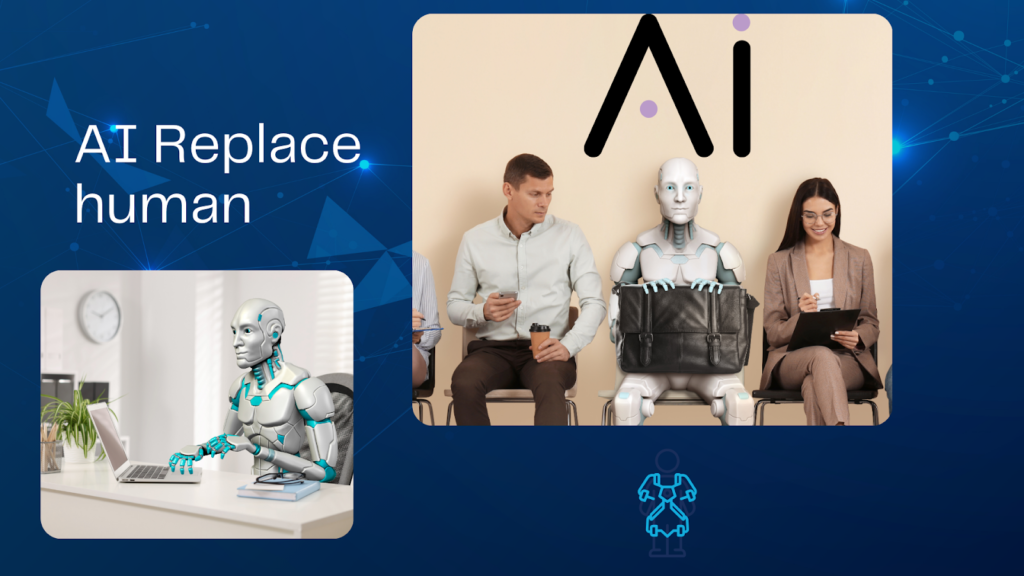
categories of AI
1. Narrow AI (Weak AI)
Narrow AI, also known as Weak AI, is created to accomplish a single task or a set of tasks. It is not capable of doing anything else other than what it was programmed or trained to do, and it is not capable of human-like thinking or reasoning. Narrow AI is excellent at what it does, and it can even do it better than humans, but it cannot apply its knowledge to other tasks that are not related to its original purpose
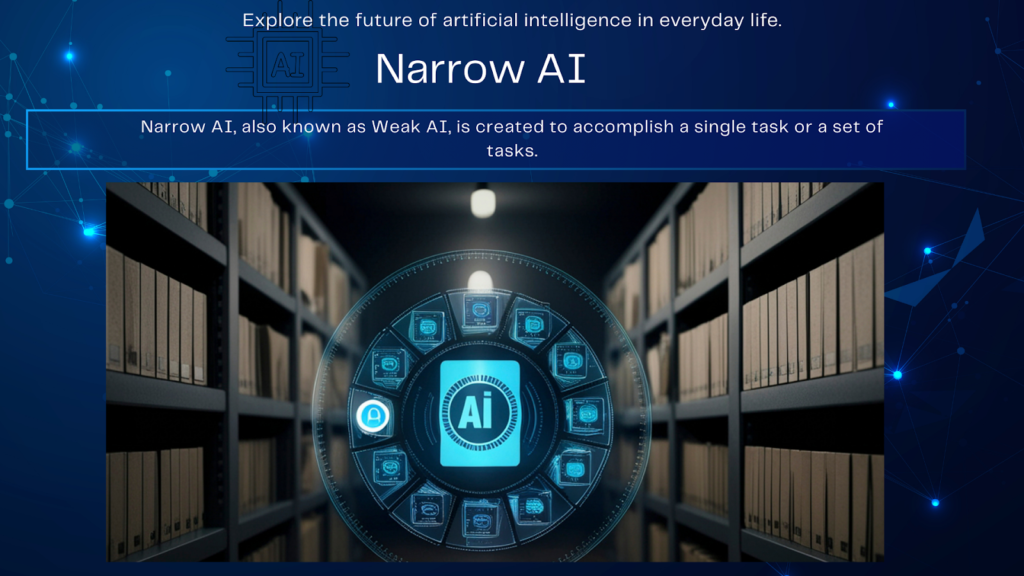
Features: Designed for a single task
Not capable of human-like thinking or reasoning
Examples:
Virtual assistants such as Siri, Alexa, and Google AssistantRecommendation systems on Netflix, YouTube, and Amazon
Face recognition software on smartphones
3. Super AI
AI is a hypothetical AI that is more intelligent than humans in all possible ways, such as creativity, problem-solving, emotional intelligence, and decision-making. Super AI is not only going to be as intelligent as humans but will be much more intelligent than them. Super AI is a subject of future predictions and philosophical debates.
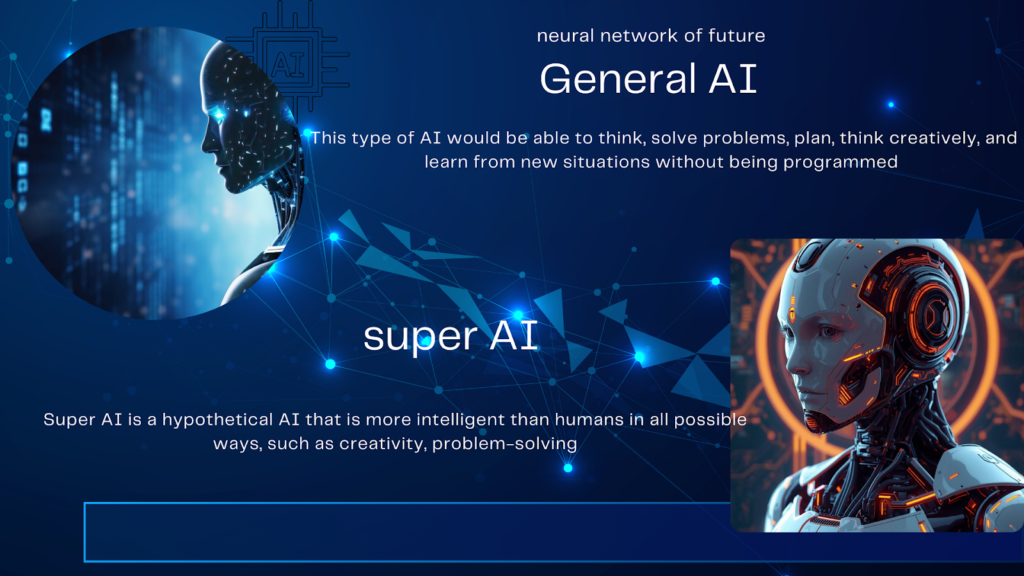
Features:
More intelligent than human brains
Self-improving
More intelligent than humans in all areas
Not developed yet
Examples:Only found in science fiction movies and novels
There is no implementation in real life
4. Canva AI (Design & Presentation AI)
Use:Canva AI is employed to automatically design presentations, posters, social media posts, resumes, and graphics using AI templates and designs.
How It Works:Canva AI employs user text input and automatically chooses layouts, colors, fonts, and images through design algorithms. The tool applies machine learning to recommend designs depending on the content type. Users can simply enter a topic, and Canva will design pre-made slides. It also employs AI to resize designs for various platforms.
Example:A student enters “Climate Change Presentation,” and Canva automatically designs 10 slides with images and headings
5.Beautiful.ai (Smart Presentation AI)
Use: Beautiful.ai is used to create professional business and school presentations.
How It Works:Beautiful.ai uses AI-based layout engines that automatically adjust spacing, alignment, and design. When users add content, the slide design changes automatically. It also follows design rules to keep slides neat and professional. No manual design skills are required.
Example: The teacher adds bullet points, and Beautiful.ai automatically arranges them into clean slides.
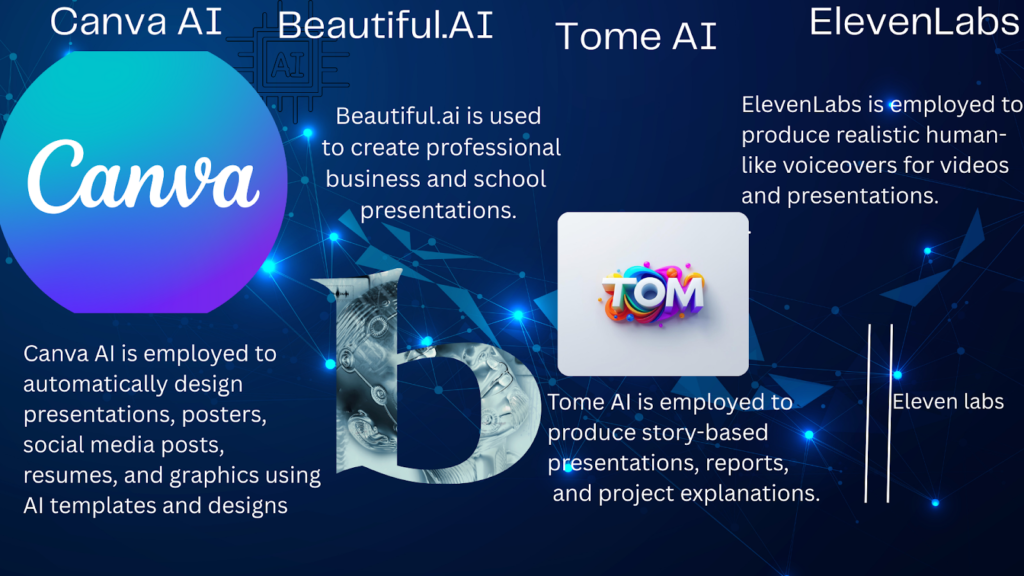
Tome AI (Story-Based Presentation AI)
Use:Tome AI is employed to produce story-based presentations, reports, and project explanations.
How It Works:The user enters a topic or prompt, and Tome employs generative AI to produce content and design for the slides. It involves text generation and layout design. It also involves automatic image addition using AI. The emphasis is on storytelling.
Example:The user types “History of Artificial Intelligence,” and a complete presentation with text and images is produced.
ElevenLabs (Voice Generation AI)
Use:ElevenLabs is employed to produce realistic human-like voiceovers for videos and presentations.
How It Works:It employs deep learning voice models trained on speech samples. The AI learns tone, accent, and emotions from voice samples. It translates written text into natural speech audio. It can also clone voices with consent.
Example:A student adds voiceovers to the project video using ElevenLabs audio
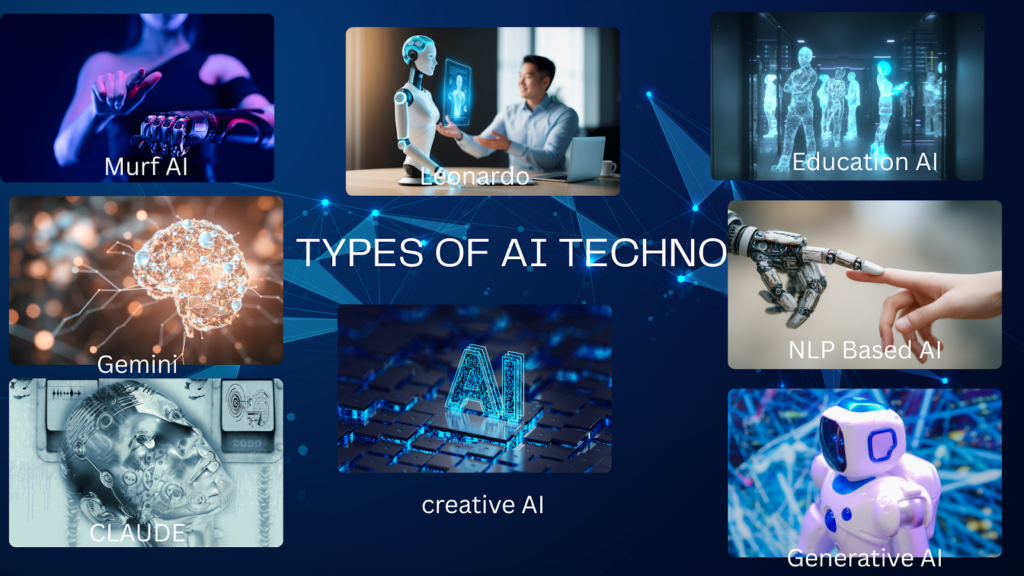
Murf AI (Text-to-Speech & Voiceover AI)
Use:Murf AI is used for professional voiceovers in presentations, advertisements, and educational videos.
How It Works:Murf AI uses speech synthesis models that translate text into audio speech. Users select voice, speed, and emotion. The AI translates text into studio-quality audio. It supports multiple languages and accents.
Example:A business presentation uses Murf AI voice rather than recording it manually.
Gemini (Google AI – NLP Based AI)
Use:Gemini is used for writing, answering questions, coding assistance, and learning assistance.
How It Works:Gemini uses Natural Language Processing (NLP) and large language models. It interprets user questions and predicts the correct response based on training data. It can summarize, describe, and generate text. It also integrates with Google services.
Example:
A student asks Gemini to describe photosynthesis in simple terms for slides
Claude (Conversational AI – NLP Based)
Use:Claude is used for writing, research assistance, summarizing documents, and safe AI conversations.
How It Works:Claude uses large language models trained on text data. It interprets human language and responds in a logical manner. It emphasizes safe and ethical responses. It can analyze long documents and summarize them.
Example:A user uploads a CHAPTER and ask to summarise.
Leonardo AI (Creative Image Generation AI)
Purpose:Leonardo AI is designed to generate digital artworks, illustrations, and game objects based on text inputs.
Functionality:It relies on generative diffusion models trained on image data. The AI translates text inputs into images. It extracts shapes, colors, and styles from the training images. Users can specify art style and details.
Example:Inputting “futuristic city at night” produces high-quality artworks
Creative AI (General Category)
Purpose:Creative AI is designed to generate artworks, music, videos, writing, and designs based on text inputs.
Functionality:It relies on generative models trained on creative data sources. The AI analyzes patterns in artworks and music. It produces new creative content based on user inputs. It assists artists and designers.
Example:AI composing background music for a school video project
Generative Video AI
Purpose:Generative Video AI is designed to generate videos automatically from text or image inputs.
Functionality:It relies on deep learning and video synthesis models. The AI forecasts image movements between video frames. It translates text inputs into animated or realistic video scenes. No camera or video editing required.
Example:Inputting “student studying at desk” produces a short animated video
NLP Based AI (Natural Language.
Types of technology (AI)
NLP Based AI (Natural Language Processing AI)
Use:NLP AI is utilized for understanding and generating human language in chatbots and translators.
How It Works:It divides sentences into words and meanings through language models. It observes grammar, sentence patterns, and word connections. The AI forecasts proper answers according to context. Used in chat and translation applications.
Example:Google Translate English to Hindi through NLP.
Education AI
Use:Education AI is utilized for assisting in learning, tutoring, and exam preparation.
How It Works:It observes student activity and learning rate. The AI tailors lessons according to performance. It suggests practice questions and explanations. It applies machine learning to adaptive learning.
Example:AI tutoring applications providing personalized math practice.
NotebookLM (Study & Notes AI)
Use:NotebookLM is utilized for creating notes, summaries, and study guides from textbooks and PDFs.
How It Works:Users upload documents, and the AI processes only those files. It responds to questions from the uploaded documents. It applies NLP and language models. It does not use external internet information for accuracy.
Example:Uploading science chapter and getting slide points for presentation
PixVerse AI (Video Generator AI)
Use:The PixVerse AI tool is used to generate videos using AI.
How It Works:The tool uses generative video models and computer vision. Text inputs are translated into dynamic visual scenes. The AI forecasts motion and animation. It generates short cinematic videos.
Example: Input: “Space rocket launch at night” → AI generates video.
Artificial Intelligence (AI) applications assist individuals in making presentations, videos, voiceovers, images, and study notes easily and quickly with the help of intelligent computer programs.
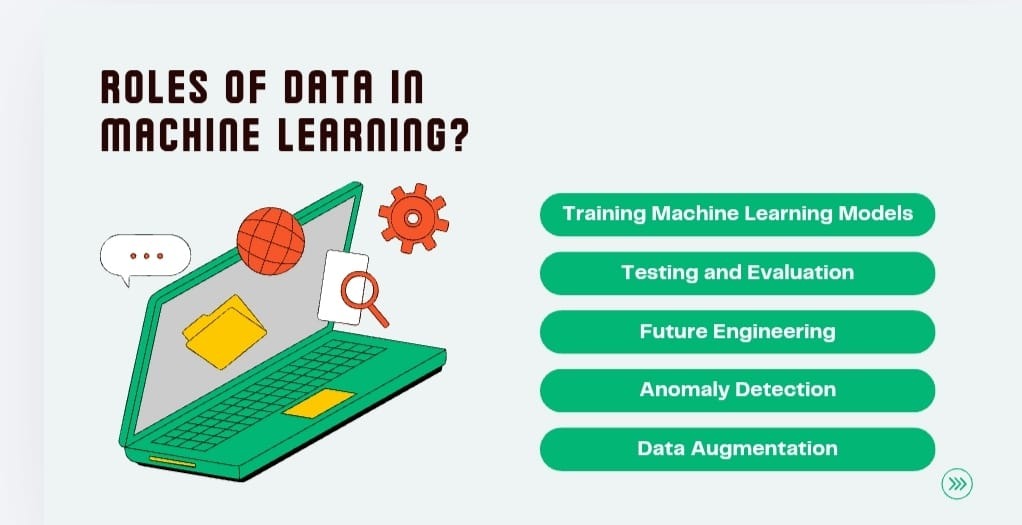
What is machine learning ?
Machine Learning and Deep Learning are significant areas of ArtificialIntelligence that help computers learn from data and perform better without being explicitly programmed. Machine Learning relies on algorithms to analyze data, detect patterns, and make decisions, and it usually involves human selection of key features from the data. Deep Learning is a type of Machine Learning that employs multi-layered neural networks to automatically learn complex features from large datasets.
Although Machine Learning is effective with smaller and more organized datasets, Deep Learning is particularly effective in areas such as image recognition, speech recognition, and natural language processing. Machine Learning and Deep Learning are widely used in practical applications such as recommendation systems, medical diagnosis, self-driving cars, and virtual assistants, making them indispensable in today’s digital age.
.
Types of ML
Supervised Learning is a machine learning technique where the learning algorithm is trained on labeled data, which means that for each input, there is a corresponding correct output. The aim is to develop a relationship between the input and output so that the model can predict the output for any given input. Examples of supervised learning include spam detection in emails, where the emails are labeled as spam or not spam, and predicting the price of a house based on its attributes such as size and location. Algorithms used in supervised learning include Linear Regression, Logistic Regression, Support Vector Machines (SVM), k-Nearest Neighbors (k-NN), and Decision Trees
Unsupervised Learning is performed on unlabeled data, where the model attempts to identify hidden patterns or structures without knowing the right answers in advance. It is primarily used for grouping and identifying patterns. Examples include customer segmentation, where customers are categorized based on similar behavior, and anomaly detection, which detects unusual or rare data points. The algorithms used in unsupervised learning include K-means clustering, Hierarchical Clustering, and Principal Component Analysis (PCA).
Reinforcement Learning is based on learning through trial and error, where an agent interacts with an environment and learns by receiving rewards or penalties for actions taken. The aim is to maximize total rewards over time by selecting the best actions. This form of learning is commonly used in game playing, such as playing Chess and Atari games, as well as in robotics and autonomous systems, where the system learns and improves its performance over time
Real world application of AI
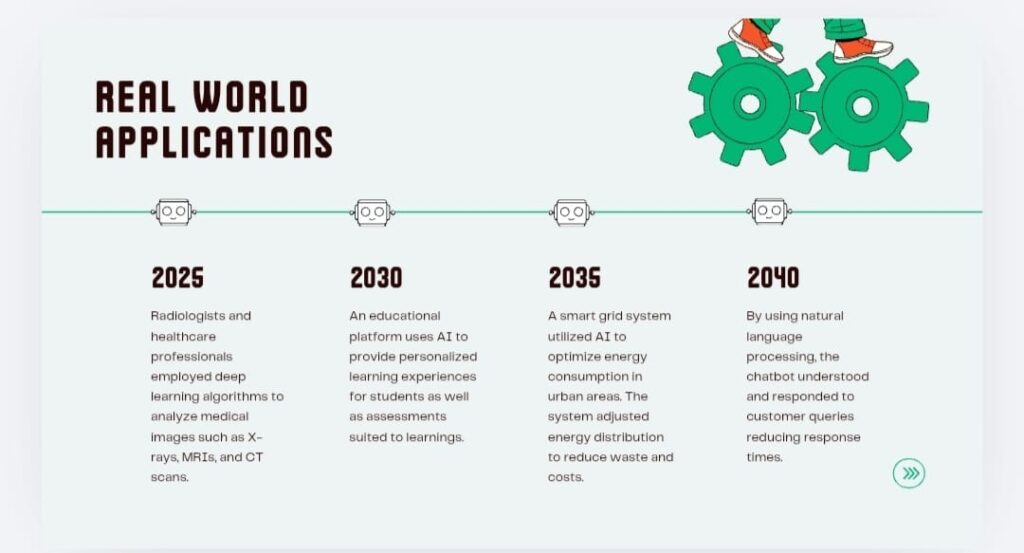
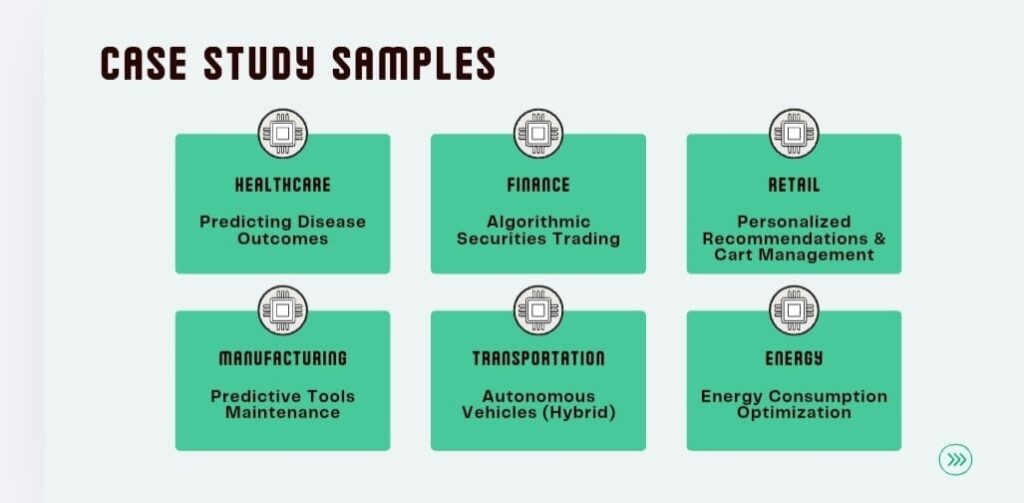
Artificial Intelligence has numerous applications in real-life situations, including the medical, banking, education, transport, and entertainment sectors. It assists doctors in diagnosing patients, banks in detecting fraud, students in learning through personalized learning systems, and drivers in navigating through smart traffic systems. Online shopping and streaming sites also apply AI in recommending products, movies, and songs based on the interests of the users. Voice assistants and smart home devices are other examples of how AI is making life easier and more efficient.
AI is employed in hospitals to assist doctors in identifying diseases, in banks to prevent fraud, and in schools to enable students to learn effectively AI is also employed in vehicles for navigation and in mobile phones for voice assistants.
Risks and Ethical Benefits of Artificial Intelligence (AI)
Artificial Intelligence offers ethical advantages by assisting in the betterment of the healthcare, education, and safety sectors, as well as assisting in ethical decision-making if designed in the right manner. AI may also decrease the chances of human bias in certain situations, increase access to services, and help people with disabilities through smart technology. But AI also poses certain risks and ethical issues. These may include job loss due to automation, privacy concerns due to data collection, and biased decision-making if the data used to train the AI is biased. There is also a possibility of misuse of AI in surveillance and deepfake technology. Hence, it is necessary to use AI in a responsible manner with robust laws to ensure that it does not cause harm to society.
Ethical Advantages of AI
Enhances healthcare and saves lives
Assists people with disabilities (assistive technology)
Reduces human error and bias (if trained properly)
Enhances safety in transport and industries
Increases access to education and information
Risks and Ethical Issues of AI
Job displacement through automation
Privacy and security concerns
Bias and discriminatory decisions by AI systems
Misuse in surveillance and fake media (deepfakes)
Lack of transparency in AI decisions
AI in Business/ Daily Life/ and the Future of AI
| AI in Business | AI in Daily Life | Future of AI |
|---|---|---|
| Chatbots for customer service | Voice assistants | Self-driving cars and smart transport |
| Fraud detection in banking | Face unlock and phone security | AI doctors and medical robots |
| Sales and demand forecasting | Navigation apps and traffic updates | Personalized education systems |
Artificial Intelligence assists companies in increasing efficiency, lowering costs, and offering improved customer service by using chatbots, fraud analysis, and targeted marketing. In practical applications, AI is employed in smartphones, GPS applications, and smart home appliances to simplify lives. In the future, AI applications will be widespread in the healthcare, education, and transportation sectors, but it is essential to apply AI with proper ethical guidelines.
Overall View
Artificial Intelligence is changing the way businesses and many sectors operate by increasing efficiency, accuracy, and convenience. It assists in making better decisions, saves time, and enables innovation in the healthcare, education, and transport sectors. Although Artificial Intelligence has numerous benefits, it also poses ethical issues that need to be handled carefully.
Artificial Intelligence has immense potential to enhance life on earth if used judiciously
Key Takeaways
- AI increases efficiency and decreases human effort
- Used extensively in the corporate world and in our daily lives
- Assists in the medical, educational, and transport sectors
- Future of AI looks bright but requires moral regulation